https://www.thedailybeast.com/from-the-confederacy-to-catalonia-the-arrogance-of-secession
The book is the true story of a British diplomat and secret agent at the epicenter of secession. It will change forever our understanding of the War Between the States, why it was fought, what determined the outcome. This site is devoted to the consequences of that history.
Showing posts with label civil war. Show all posts
Monday, November 6, 2017
Monday, October 16, 2017
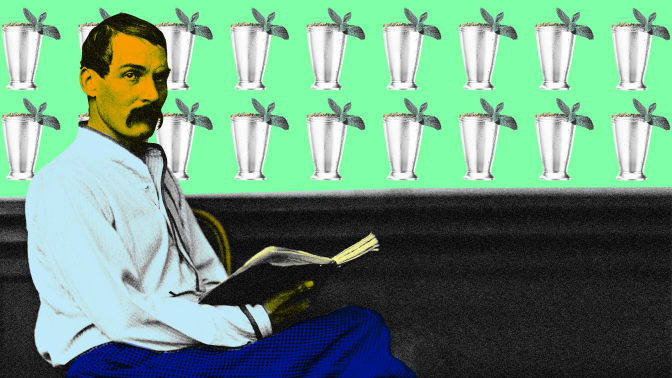
Recent writings: How a British Spy Drank His Way Across the Americas—and Missed the Civil War
Exploring the mystery that first led me to Our Man in Charleston.
How a British Spy Drank His Way Across the Americas
Richard Francis Burton was one of the great adventurers of the Victorian era, and a spy. But several weeks just before the Civil War are curiously missing from his life's account.
For more stories from the last several months, several of them written with colleagues, visit:
Labels:
African slave trade,
civil war,
cocktails,
espionage,
explorers,
fryston hall,
lord houghton,
mormons,
richard francis burton,
richard monckton milnes,
secession,
slavery,
spies,
yorkshire
Saturday, July 23, 2016
Robert Smalls: The Slave Who Stole the Rebel Codes — and a Confederate Warship
From my article in The Daily Beast:
We don’t know precisely why the three white officers on board a Confederate transport and gunboat called the CSS Planter decided to go ashore in Charleston, South Carolina, the night of May 12, 1862.
Maybe they went to see their families. Maybe they went drinking or whoring. Certainly they were acting against orders, but they seemed to think the slave they left in charge of the Planter, a skilled 23-year-old harbor pilot named Robert Smalls, would take good care of the ship for them.
On board were pieces of naval artillery, including a 32-pounder on a pivot, a 24-pounder howitzer, and a gun that had been at Fort Sumter. There were 200 rounds of ammunition, and according to several accounts there was a book of codes and signals that were currently in use by the Confederate Navy. Perhaps most importantly, there was Smalls himself, a true fount of information about Confederate defenses around Charleston harbor.
A couple of hours before dawn, the Planter started its engines and its paddle wheel began to turn. It pulled away from the wharf in plain site of the Confederate commanding general’s headquarters, but nobody moved to stop it.... MORE
Monday, May 16, 2016
Confessions of the Confederate Spymaster at Shiloh
This piece written for The Daily Beast and published in its entirety on May 5, 2016, grew out of a talk I gave while accompanying a New York Times Journeys tour of the Shiloh, Corinth and Brice's Crossroads battlefields earlier in the month.

SHILOH BATTLEFIELD, Tennessee—It’s rare in history that spymasters get credit for victories, but, then again, only occasionally are they blamed for disasters. Few are so bold or so foolish as to declare that something is an absolute fact, as CIA Director George Tenet did when he told President George W. Bush the intelligence confirming Saddam Hussein had weapons of mass destruction was a “slam dunk.”
No, the language of espionage is a language of qualification. Do the Iranians have a nuclear weapons program? A key National Intelligence Estimate in 2007 concluded they sort of didn’t but, then again, might just. (“We judge with high confidence that in fall 2003, Tehran halted its nuclear weapons program; we also assess with moderate-to-high confidence that Tehran at a minimum is keeping open the option to develop nuclear weapons.”)
One can imagine the frustration of presidents, or for that matter, generals, when they get that kind of fact-fudged information. So the question often becomes, for them, less about what information can trusted than about whose information and whose judgment can be trusted, and that person, whether as spymaster, chief of staff, or with some more mysterious title, becomes the bearer of good news, bad news, and, most importantly, trusted news.
But that person is not in the public eye. The leader he or she reports to gets the credit or the blame. And when it comes to the military, the spymaster or staff officer remains in the shadows, without a command, and without a reputation; a footnote in hundreds of histories, the central figure in few or none.
Such a man, here at the horrific Battle of Shiloh in April 1862, was Adjutant-General Thomas Jordan, who had been Confederate Gen. Pierre Gustave Toutant Beauregard’s right-hand man since before the first Battle of Bull Run the year before, who would stay with him through most of the war, and who defended Beauregard’s reputation ferociously—one might say as if it were his own—ever afterward.
Shiloh, which took place almost one year after the Rebel attack on Fort Sumter that started the American Civil war, was the first truly bloody battle in a conflict that eventually turned slaughter into an industrial activity. At Shiloh there were more casualties (killed, wounded and missing) than in all the previous American wars combined: from the Revolution to 1812, from the Halls of Montezuma to the shores of Tripoli, the carnage pales by comparison.... MORE
SHILOH BATTLEFIELD, Tennessee—It’s rare in history that spymasters get credit for victories, but, then again, only occasionally are they blamed for disasters. Few are so bold or so foolish as to declare that something is an absolute fact, as CIA Director George Tenet did when he told President George W. Bush the intelligence confirming Saddam Hussein had weapons of mass destruction was a “slam dunk.”
No, the language of espionage is a language of qualification. Do the Iranians have a nuclear weapons program? A key National Intelligence Estimate in 2007 concluded they sort of didn’t but, then again, might just. (“We judge with high confidence that in fall 2003, Tehran halted its nuclear weapons program; we also assess with moderate-to-high confidence that Tehran at a minimum is keeping open the option to develop nuclear weapons.”)
One can imagine the frustration of presidents, or for that matter, generals, when they get that kind of fact-fudged information. So the question often becomes, for them, less about what information can trusted than about whose information and whose judgment can be trusted, and that person, whether as spymaster, chief of staff, or with some more mysterious title, becomes the bearer of good news, bad news, and, most importantly, trusted news.
But that person is not in the public eye. The leader he or she reports to gets the credit or the blame. And when it comes to the military, the spymaster or staff officer remains in the shadows, without a command, and without a reputation; a footnote in hundreds of histories, the central figure in few or none.
Such a man, here at the horrific Battle of Shiloh in April 1862, was Adjutant-General Thomas Jordan, who had been Confederate Gen. Pierre Gustave Toutant Beauregard’s right-hand man since before the first Battle of Bull Run the year before, who would stay with him through most of the war, and who defended Beauregard’s reputation ferociously—one might say as if it were his own—ever afterward.
Shiloh, which took place almost one year after the Rebel attack on Fort Sumter that started the American Civil war, was the first truly bloody battle in a conflict that eventually turned slaughter into an industrial activity. At Shiloh there were more casualties (killed, wounded and missing) than in all the previous American wars combined: from the Revolution to 1812, from the Halls of Montezuma to the shores of Tripoli, the carnage pales by comparison.... MORE
| A derelict filling station that's a relic of the South where I grew up. |
| Rifles, including assault rifles, for sale at the Bass Pro Shop pyramid in Memphis. |
| The statue of Jefferson Davis in Memphis, Tennessee |
| A quiet corner of Corinth, Mississippi |
| Wasps on a cannon at Shiloh Battlefield |
Talking about "Our Man" at The Metropolitan Club of Washington DC, 11:45 on Tuesday
If you are a member of The Metropolitan Club of Washington D.C., please do come join in the conversation tomorrow about "Our Man in Charleston." We'll be breaking some fresh ground in this innovative history that's changed the way we see the Civil War.
Conversations: Christopher Dickey on Our Man in Charleston
Tuesday, May 17
Please use the link above to make a reservation, or click here to email the Front Desk.Join us on Tuesday, May 17 for a Library Conversation when our guest will be the well-known journalist Christopher Dickey. He will be speaking about his new book, Our Man in Charleston: Britain’s Secret Agent in the Civil War South. It tells the story of Robert Bunch, the British Consul in Civil War era Charleston, who used all the tools of diplomacy and espionage to keep Great Britain from recognizing the Confederacy and reopening the Atlantic slave trade. It is a deeply researched and thrilling account of the fight over slavery and of relations between the US and Great Britain, which has been praised by such noted Civil War historians as James McPherson and Harold Holzer. In addition, Joan Didion praised the book as “a perfect book about an imperfect spy” and ex-CIA operative Robert Baer called it “the best espionage book I’ve read.”
Christopher Dickey is currently the Paris-based Foreign Editor for The Daily Beast and has been a foreign correspondent for Newsweek and the Washington Post. He has written numerous other books, including With The Contras on Nicaragua, Securing the City on the NYPD and Summer of Deliverance on his father, the poet James Dickey. We are honored to have Christopher Dickey as our guest to share with us an unfamiliar aspect of the Civil War.
Conversations begin with a complimentary glass of wine (and a slice of cheese) at about 11:45 a.m. Catherine Porter will be the interlocutor for this Library Conversation. She will have us seated by noon, and we will wind up no later than 12:45 p.m. after which many of us will escort our guest to the Treasury Room on the Fourth Floor where we will have lunch and continue the dialogue. Although there is no charge for this event, it would be helpful if those planning to attend were to notify the Front Desk or register online.The Metropolitan Club of the City of Washington / 1700 H Street, NW, Washington, D.C. 20006 / (202) 835-2500
The Metropolitan Club of City of Washington
1700 H Street Northwest | Washington | District of Columbia | 20006
Sunday, April 24, 2016
The Texas Embassy in the City of Light: A Sorry History of Greed, Slavery and, now, New Talk of Secession
PARIS — Near Place Vendôme in the most luxurious corner of Paris, a few steps from the Ritz and across from a new Louis Vuitton store, but high above the street where nobody is likely to notice, a legend engraved in stone marks the site of the Ambassade du Texas, and informs the passer-by below that on 29 September 1839 France was the first nation to recognize that short-lived republic.
This historical relic of Lone Star independence in la ville lumière is a quaint reminder of the nation that once was and, between the etched lines, of its particularly grim, even gruesome, history of slavery, anti-Hispanic racism, grand delusions and grinding privations. French recognition, after all, was not a matter of idealism or ideology, but of greed, and much of Texas at the time was a hell on earth that some of the cynical French tried to sell to their countrymen as paradise. ... READ THE REST OF THIS STORY ON THE DAILY BEAST.
Sunday, March 20, 2016
Black Spies in the Confederate White House (excerpt)
My latest coverage of the American Civil War for The Daily Beast:
The servants knew. The Confederate White House in Richmond, Virginia, was not a happy home. The coachman had heard Varina Davis, the first lady of the South, wondering aloud if the rebellion her husband led had any prayer of success. It was, he heard her say, “about played out.” Less than a year into the war, she had all but given up hope. And the president himself, Jefferson Davis, gaunt and sere, was under tremendous strain, disheartened and querulous, complaining constantly about the lack of popular support for him and his policies.
What the servants at the dinner table heard could be even more interesting: insights into policy, strategy and very private lives. They could glimpse up close the troubled emotions of Varina, who was much younger than her husband. She was in her mid-30s, he was in his mid-50s, and her energy, even her sultry beauty, were resented by many in that small society. She had a dark complexion and generous features that led at least one of her critics to describe her publically as “tawny” and suggest she looked like a mulatto.
Varina’s closest friend and ally in the cabinet was Judah P. Benjamin, the cosmopolitan Jewish secretary of war and then secretary of state. He was a frequent visitor to the Davis residence. He shaped Confederate strategy around the globe. And over port after dinner, what intimacies might have been revealed about this man, whose Louisiana Creole wife lived in self-imposed exile in Paris, and whose constant companion in Richmond was her beautiful younger brother?
As in any of the big households of yesteryear (one thinks of “Downton Abbey,” to take a popular example), what the servants knew about the masters was a great deal more than the masters knew about them. And in the Davis household the servants were black slaves, treated as shadows and often as something less than sentient beings. The Davises knew little of their lives, their hopes, their aspirations, and they certainly did not realize that two of them would spy for the Union.
History is almost equally oblivious. When it comes to secret agents, or servants, or slaves, all learned to tell the smooth lie that let them survive, and few kept records that endure. When it comes to the question of the spies who worked in the Confederate White House, where solid documentary evidence has failed, legend often has stepped in to fill the gaps and, to some considerable extent, to cloud the picture. ... MORE
The servants knew. The Confederate White House in Richmond, Virginia, was not a happy home. The coachman had heard Varina Davis, the first lady of the South, wondering aloud if the rebellion her husband led had any prayer of success. It was, he heard her say, “about played out.” Less than a year into the war, she had all but given up hope. And the president himself, Jefferson Davis, gaunt and sere, was under tremendous strain, disheartened and querulous, complaining constantly about the lack of popular support for him and his policies.
What the servants at the dinner table heard could be even more interesting: insights into policy, strategy and very private lives. They could glimpse up close the troubled emotions of Varina, who was much younger than her husband. She was in her mid-30s, he was in his mid-50s, and her energy, even her sultry beauty, were resented by many in that small society. She had a dark complexion and generous features that led at least one of her critics to describe her publically as “tawny” and suggest she looked like a mulatto.
Varina’s closest friend and ally in the cabinet was Judah P. Benjamin, the cosmopolitan Jewish secretary of war and then secretary of state. He was a frequent visitor to the Davis residence. He shaped Confederate strategy around the globe. And over port after dinner, what intimacies might have been revealed about this man, whose Louisiana Creole wife lived in self-imposed exile in Paris, and whose constant companion in Richmond was her beautiful younger brother?
As in any of the big households of yesteryear (one thinks of “Downton Abbey,” to take a popular example), what the servants knew about the masters was a great deal more than the masters knew about them. And in the Davis household the servants were black slaves, treated as shadows and often as something less than sentient beings. The Davises knew little of their lives, their hopes, their aspirations, and they certainly did not realize that two of them would spy for the Union.
History is almost equally oblivious. When it comes to secret agents, or servants, or slaves, all learned to tell the smooth lie that let them survive, and few kept records that endure. When it comes to the question of the spies who worked in the Confederate White House, where solid documentary evidence has failed, legend often has stepped in to fill the gaps and, to some considerable extent, to cloud the picture. ... MORE
Thursday, December 10, 2015
Guns, Slaves, Insurrection and the Hidden History of the 2nd Amendment
My column for The Daily Beast, "The US 'Right' to Own Guns Came with the 'Right' to Own Slaves," published Dec. 6, caused predictable outrage among NRA types, who thought I was accusing them of racism. I certainly was not. But having read their various tweets and emails, I am impressed by their ignorance.
People cling to the myths that suit them, and the myth that many gun-owners clutch so tightly you'd have to pry it from their cold dead hands is that collecting and carrying firearms is somehow an antidote to tyranny, and that's why the Founding Fathers wrote the 2nd Amendment into the Bill of Rights.
That sounds plausible, given the history of the Minute Men and the early battles of the American Revolution, but it's simply not true.
Paul Revere rode through the streets shouting "The British are coming!" to warn people the Redcoats were out to take their guns, and the rabble in arms at Lexington, Concord and Bunker Hill did a creditable job firing from behind stone walls and trenches against Englishmen foolishly mounting frontal assaults in the open.
But George Washington understood very quickly that, over the long run, the militias were no match for a regular army. Even at Bunker Hill, significant desertions contributed, ultimately, to the loss of the rebel position. At the disastrous Battle of Camden, in South Carolina in 1780, the militias on the front lines, faced with a bayonet charge, turned and ran without firing a shot.
Eight years later, as the former colonies debated ratification of their new Constitution and the need for amendments, few of the leaders had much faith in the efficacy of armed citizens up against a foreign invasion or the regular army of their own government. The purpose of the "well regulated militia necessary for the security of a free State" codified in the Bill of Rights was quite different.
In "The Hidden History of the Second Amendment," an academic paper published in 1998, law professor Carl T. Bogus argued that, "The Second Amendment was not enacted to provide a check on government tyranny; rather, it was written to assure the Southern states that Congress would not undermine the slave system by using its newly acquired constitutional authority over the militia to disarm the state militia and thereby destroy the South's principal instrument of slave control."
Some relevant passages —
Where did the militias and the need to bear arms fit in?
Virginia, South Carolina and Georgia all had regulated slave patrols, and by the mid-18th century the patrols had become the responsibility of the militia.
Is there more to the story? Of course. And I'd take issue with Bogus's apparent contention that the amendment was only about slave-patrol militias. The idea that "the rifle hanging on the wall" is a bulwark against tyranny (a notion embraced in an oft-cited out of context quote by George Orwell) was at least as strong in the late 18th century as it is today. The romance of insurrectionism, born early, lived on among politicians, and there were a few states in the North that codified the right to bear arms before the Bill of Rights, notably "Live Free or Die" New Hampshire. In the great push westward, manifest destiny manifestly depended on a populace that carried guns.
But the power over this issue lay in the South, which was much bigger, much richer, and much more concerned about "servile insurrection." And in the South, it was precisely the combination of slaveholding and insurrectionism that eventually lead to the Civil War.
After John Brown's raid on Harper's Ferry in 1859 (illustration above), the militias started to look more and more like regular armies, not only to intimidate and subdue the slaves, but to prepare for secession. And, ironically, the Federal government, dominated at the time by Southern interests, gave them all the guns they needed to launch a war against the Union just 18 months later.
None of this, it seems to me, argues in favor of "gun rights" today.
Friday, September 25, 2015
Had a great time presenting #OurManInCharleston, stepping back into the 19th century at @theplayersnyc last night
What a great venue for a book about the Civil War and the madness that led to it — the home of the great actor Edwin Booth, brother of the infamous assassin John Wilkes Booth. Those who came to the reading were privileged to visit Edwin's bedroom, where there is only one picture of his brother, and that a very small one positioned behind the corner of his bed where he would see it only very rarely, if ever.
You can find out more about the club here.
Thursday, August 13, 2015
The Star-Spangled Slave Trade of the 1850s: My Talk at Politics and Prose
This is part of my talk at Politics and Prose in Washington D.C., which included many interesting questions raised by the audience.
At about 40 minutes into the presentation a man asked about the
transatlantic slave trade in the 1850s, and in the six minutes that followed I tried to convey some sense of the horrors of that traffic—most of which was conducted between the west coast of Africa and Cuba, but under the flag of the United States.
I subsequently wrote a piece for The Daily Beast adapted from the book and focusing on the issue of the Cuban slave trade.
This is a link to the full presentation at Politics and Prose: https://www.youtube.com/watch?t=31&v=yf0QSdGBirg
At about 40 minutes into the presentation a man asked about the
transatlantic slave trade in the 1850s, and in the six minutes that followed I tried to convey some sense of the horrors of that traffic—most of which was conducted between the west coast of Africa and Cuba, but under the flag of the United States.
![]() |
| Slaves in Cuba |
This is a link to the full presentation at Politics and Prose: https://www.youtube.com/watch?t=31&v=yf0QSdGBirg
Tuesday, August 11, 2015
Sunday, August 9, 2015
Bull Run Aftermath - Rebels Bayoneting Wounded according to Harper's Weekly
"The Rebels bayoneting our wounded on the battlefield at Bull Run" — It took the editorialists and engravers at Harper's Weekly several issues to catch up with the Union defeat at Manassas. This is from the issue dated August 17, 1861. For more about the battle and the context, read Our Man in Charleston, now available on Amazon and at your local bookstores.
All engravings courtesy The American Library in Paris.
Friday, August 7, 2015
Bull Run Aftermath - Harper's Weekly Aug 10, 1861 - Charge of the Black Horse Cavalry
It took the editorialists and engravers at Harper's Weekly several issues to catch up with the Union defeat at Bull Run. Over the next few days we will be running some of the illustrations, which grew progressively more dramatic. This is from the issue dated August 10, 1861, and shows the charge of the Black Horse Cavalry. For more about the battle and the context, read Our Man in Charleston, now available on Amazon and at your local bookstores.
All engravings courtesy The American Library in Paris.
Thursday, August 6, 2015
Bull Run Aftermath - Harper's Weekly August 10, 1861
It took the editorialists and engravers at Harper's Weekly several issues to catch up with the Union defeat at Bull Run. Over the next few days we will be running some of the illustrations, which grew progressively more dramatic. This is from the issue dated August 10, 1861, and shows what looks like an orderly "retreat by moonlight." As the account by William Howard Russell in Our Man in Charleston makes clear, that was far from the case.
Thursday, July 23, 2015
Would the South Have Won the War? My appearance on BBC TV
When the Confederates seceded from the Union they took it as a given that Britain would back them … Robert Bunch’s reporting was one major reason that did not happen.
Published This Week, Moving Up the Amazon Best-Seller Lists
Your local independent bookstore should have Our Man in Charleston: Britain's Secret Agent in the Civil War South
prominently displayed. (And if not, ask why not!) It's also all over Amazon, with a fantastic price for the moment of $14.01 for the beautifully produced hardcover edition, plus a Kindle edition, and an Audible audio version read elegantly and appropriately by a Briton, Antony Ferguson.
The hardcover book also is available at Barnes and Noble stores and B&N online.
"Our Man in Charleston is a joy to discover. It is a perfect book about an imperfect spy."
—Joan Didion
"Thoroughly researched and deftly crafted. [Our Man in Charleston will] introduce people to a man who should be better known, one who cannily fought the good fight at a fateful moment in history."
—Wall Street Journal
"One heck of a good read."
—The Charlotte Observer
"[Bunch is] a brilliant find…Dickey, the foreign editor of The Daily Beast and a former longtime Newsweek correspondent, uses his research well: in a story like this one, point of view is everything, and Bunch's is razor sharp."
—American Scholar
"Dickey has written a book that is as much suspense and spy adventure as it is a history book... A story as compelling as this one does not come around very often. With so much already written about the Civil War, and more coming every year, originality is a rare thing these days. The story of Robert Bunch is that and more."
—The Carolina Chronicles
"A fascinating tale of compromise, political maneuvering, and espionage."
—Publishers Weekly
"Dickey's comprehension of the mindset of the area, coupled with the enlightening missives from Bunch, provides a rich background to understanding the time period….A great book explaining the workings of what Dickey calls an erratic, cobbled-together coalition of ferociously independent states. It should be in the library of any student of diplomacy, as well as Civil War buffs."
—Kirkus Reviews (starred)
"A fine examination of a superbly skilled diplomat."
—Booklist
"Britain's consul in Charleston before and during the first two years of the Civil War was outwardly pro-Southern and earned notoriety in the North. But in secret correspondence with the British Foreign Office he made clear his hostility to slavery and the Confederacy. His dispatches helped prevent British recognition of the Confederacy. Christopher Dickey has skillfully unraveled the threads of this story in an engrossing account of diplomatic derring-do."
—James M. McPherson, Pulitzer Prize-winning author of Battle Cry of Freedom
"Did Robert Bunch, Her Majesty's consul in Charleston, keep Britain out of the Confederacy's war? Drawing on Bunch's clandestine correspondence, Christopher Dickey makes a compelling case that this dazzlingly duplicitous, ardent anti-slaver played a key role. A fascinating, little-known shard of vital Civil War history, brought glitteringly alive with all the verve and panache of a master story teller."
—Geraldine Brooks, Pulitzer Prize-winning author of March
"In his extraordinary new history Our Man in Charleston, Christopher Dickey has written a book you can't put down. This is a well-researched history with the immense power and sheer element of surprise we find in the finest spy novels. It's like reading a book by Graham Greene, written while he was staying at the house of John le Carré, discussing the fate of nations over drinks. With Charleston consul Robert Bunch, Dickey has introduced a new great man in the great war that haunts America still. I adored this book."
—Pat Conroy, author of The Great Santini and South of Broad
"Our Man in Charleston is a superlative and entertaining history of the grey area where diplomacy ends and spy craft begins. British Consul Robert Bunch played a secret role in the anti-slavery fight in Charleston, which would remain secret to this day were it not for Christopher Dickey's extraordinary detective skills."
—Amanda Foreman, author of A World on Fire and Georgiana
"Wonderfully written and researched, Our Man in Charleston is the best espionage book I've read. I couldn't put it down."
—Robert Baer, former CIA case officer and author of See No Evil
"Robert Bunch is an unlikely spy, but his bravery and moral sensibility make him an intriguing hero for Christopher Dickey's Civil War history. Dickey knows his stuff, from spying to the slave trade, and he's a master at telling a fast-paced, gripping yarn."
—Evan Thomas, author of John Paul Jones and The Very Best Men
"Christopher Dickey has accomplished the near-impossible—exhuming a forgotten but irresistible character from the dustbin of Civil War history, and bringing him back to life with painstaking research and bravura literary flair. This irresistible book opens new windows onto the complicated worlds of wartime diplomacy, intelligence-gathering and outright intrigue, and the result is fresh history and page-turning excitement."
—Harold Holzer, author of Lincoln and the Power of the Press and winner of the 2015 Gilder Lehrman Lincoln Prize
"A long-needed study of Robert Bunch, British consul in Charleston—a secret agent for the Crown in the Civil War era who outwardly praised the city and its people while privately loathing both, and who discouraged diplomatic recognition of the Confederacy by keeping his superiors abreast of its determination to continue importing slaves. Elegantly written, well researched, an engrossing story."
—Howard Jones, author of Blue and Grey Diplomacy
This month I have written two essays for The Daily Beast that put "Our Man" in the context of recent events and my own background as a Southerner. The first, "Confederate Madness Then and Now," many of you have seen already. (It's had well over 100,000 readers.) The second was just published Tuesday and includes the full length 1974 documentary I made about my uncle and his passion for Civil War artillery projectiles. Don't miss the last ten minutes when he defuses a 100-pound explosive shell with a sponge, a screwdriver and a hammer ... :
Confederates in the Blood
This week I have been talking about the book and about the Confederate legacy on NPR's "Here and Now," the BBC and MSNBC. There will be more.
I am happy and, yes, more than a little proud to say the early reviews and comments have ranged from good to great, and this week the New York Times Book Review will list Our Man as an "Editor's Choice":
"Our Man in Charleston is a joy to discover. It is a perfect book about an imperfect spy."
—Joan Didion
"Thoroughly researched and deftly crafted. [Our Man in Charleston will] introduce people to a man who should be better known, one who cannily fought the good fight at a fateful moment in history."
—Wall Street Journal
"One heck of a good read."
—The Charlotte Observer
"[Bunch is] a brilliant find…Dickey, the foreign editor of The Daily Beast and a former longtime Newsweek correspondent, uses his research well: in a story like this one, point of view is everything, and Bunch's is razor sharp."
—American Scholar
"Dickey has written a book that is as much suspense and spy adventure as it is a history book... A story as compelling as this one does not come around very often. With so much already written about the Civil War, and more coming every year, originality is a rare thing these days. The story of Robert Bunch is that and more."
—The Carolina Chronicles
"A fascinating tale of compromise, political maneuvering, and espionage."
—Publishers Weekly
"Dickey's comprehension of the mindset of the area, coupled with the enlightening missives from Bunch, provides a rich background to understanding the time period….A great book explaining the workings of what Dickey calls an erratic, cobbled-together coalition of ferociously independent states. It should be in the library of any student of diplomacy, as well as Civil War buffs."
—Kirkus Reviews (starred)
"A fine examination of a superbly skilled diplomat."
—Booklist
"Britain's consul in Charleston before and during the first two years of the Civil War was outwardly pro-Southern and earned notoriety in the North. But in secret correspondence with the British Foreign Office he made clear his hostility to slavery and the Confederacy. His dispatches helped prevent British recognition of the Confederacy. Christopher Dickey has skillfully unraveled the threads of this story in an engrossing account of diplomatic derring-do."
—James M. McPherson, Pulitzer Prize-winning author of Battle Cry of Freedom
"Did Robert Bunch, Her Majesty's consul in Charleston, keep Britain out of the Confederacy's war? Drawing on Bunch's clandestine correspondence, Christopher Dickey makes a compelling case that this dazzlingly duplicitous, ardent anti-slaver played a key role. A fascinating, little-known shard of vital Civil War history, brought glitteringly alive with all the verve and panache of a master story teller."
—Geraldine Brooks, Pulitzer Prize-winning author of March
"In his extraordinary new history Our Man in Charleston, Christopher Dickey has written a book you can't put down. This is a well-researched history with the immense power and sheer element of surprise we find in the finest spy novels. It's like reading a book by Graham Greene, written while he was staying at the house of John le Carré, discussing the fate of nations over drinks. With Charleston consul Robert Bunch, Dickey has introduced a new great man in the great war that haunts America still. I adored this book."
—Pat Conroy, author of The Great Santini and South of Broad
"Our Man in Charleston is a superlative and entertaining history of the grey area where diplomacy ends and spy craft begins. British Consul Robert Bunch played a secret role in the anti-slavery fight in Charleston, which would remain secret to this day were it not for Christopher Dickey's extraordinary detective skills."
—Amanda Foreman, author of A World on Fire and Georgiana
"Wonderfully written and researched, Our Man in Charleston is the best espionage book I've read. I couldn't put it down."
—Robert Baer, former CIA case officer and author of See No Evil
"Robert Bunch is an unlikely spy, but his bravery and moral sensibility make him an intriguing hero for Christopher Dickey's Civil War history. Dickey knows his stuff, from spying to the slave trade, and he's a master at telling a fast-paced, gripping yarn."
—Evan Thomas, author of John Paul Jones and The Very Best Men
"Christopher Dickey has accomplished the near-impossible—exhuming a forgotten but irresistible character from the dustbin of Civil War history, and bringing him back to life with painstaking research and bravura literary flair. This irresistible book opens new windows onto the complicated worlds of wartime diplomacy, intelligence-gathering and outright intrigue, and the result is fresh history and page-turning excitement."
—Harold Holzer, author of Lincoln and the Power of the Press and winner of the 2015 Gilder Lehrman Lincoln Prize
"A long-needed study of Robert Bunch, British consul in Charleston—a secret agent for the Crown in the Civil War era who outwardly praised the city and its people while privately loathing both, and who discouraged diplomatic recognition of the Confederacy by keeping his superiors abreast of its determination to continue importing slaves. Elegantly written, well researched, an engrossing story."
—Howard Jones, author of Blue and Grey Diplomacy
Sunday, July 19, 2015
From my essay "Confederate Madness Then and Now"
The essay explains recent events through the lens provided by Our Man in Charleston: Britain's Secret Agent in the Civil War South, to be published Tuesday, July 21:
The debate this last month about Confederate symbols—and about the whole damned history of the Confederacy, if truth be known—has raised questions that need to be asked, and not only about the Civil War: How do you honor brave men and women who fought to defend an evil institution? How do you dignify the memory of those who were killed, and who killed, in a war without a legitimate cause? Should they be honored at all? And if so, how?
If we’re going to answer that question—and as a Southerner, the father of a soldier, and a correspondent who has covered many wars, I think we should— then the first step toward honoring the fallen should be to tell the truth as best we can about the war in which they fell and the people who started it.
One of the most shameful aspects of the American Civil War is that hundreds of thousands of men and many women in the Confederacy gave their lives in a fight to defend the interests of a small slave-holding elite that had used its money, its control of politics and the press, the exploitation of racism and fear, and a shrewd if sickening appeal to status to mobilize the masses and then lead them to destruction. ... MORE
July 19, 1861 - The secret mission to Jefferson Davis in Richmond begins
Our Man in Charleston: Britain's Secret Agent in the Civil War South will be published July 21. As it
happens, that is also the 154th anniversary of the Battle of Bull Run or, if
you will, First Manassas. While William Howard Russell, the great war
correspondent for the Times of London, was in Washington D.C.
examining preparations for the battle everyone knew would be coming soon in
northern Virginia, his friend Consul Bunch in Charleston began laying the
groundwork for secret talks with the Confederate government (which he loathed).
The
time had come for the mission to Richmond. Bunch made his way along Meeting
Street, then
down through the covered market, which was packed with people on a
Friday afternoon. His old friend William Henry Trescot had an office nearby on
East Bay Street. After the usual exchange of pleasantries and the offered
drink, Bunch asked, “How well do you know Jefferson Davis?”
![]() |
| William Henry Trescot |
“Why,
we have very cordial relations.”
So
Bunch went to the heart of the matter. He said that he and Monsieur de
Belligny, the acting French consul in Charleston who had replaced the Count de
Choiseul, had received dispatches that morning from their respective
governments that were “of the most delicate and important character.”
“We’re
instructed to make contact with the government in Richmond—but to do so through
an intermediary,” Bunch said. “I cannot explain more fully except in the
presence of my French colleague, but we have agreed to meet you, to give you
the instructions, and ask you to become the channel of communication between us
and Richmond.” According to Trescot’s notes on the conversation, Bunch said
this was a step of “great significance and importance.”
That
night, Trescot met with Bunch and de Belligny. Bunch read aloud the initial
dispatch from Lord Russell sent in May, an official letter Lyons had sent him
in early July, and a long private letter from Lyons, as well, outlining the
need to have the Confederate government sign on to the three key provisions in
the Declaration
of Paris.
“And
now you know all that I know myself,” he said.
Trescot
tested the consuls to see just how far they might go. “Are you prepared for the
Confederate government to make an official declaration based on your request,
thus giving it implied recognition in the eyes of the world?”
“No,
no,” said the consuls, almost in unison. “This has to be a spontaneous
declaration,” said Bunch.
“I
don’t see how you can ask that,” replied Trescot. He also failed to see how the
supposedly spontaneous commitment to the terms of an international treaty by an
as yet unrecognized state would be binding. But the consuls were adamant about
secrecy.
“If
this becomes public, the United States government will revoke our exequaturs
and will dismiss Lyons and Mercier from Washington,” Bunch warned. The consuls
might, as private citizens, say this was an important step toward recognition,
but even assuming the aim of the British and French governments was to reach
recognition, they wanted to do it so as not to provoke a break with Washington.
Lyons had been perfectly explicit about that. “This indirect way is the only
way,” said Bunch.
Trescot
didn’t like the sound of it. “All this secrecy that you say is essential to the
negotiations takes away from the Confederate government the very same incentive
you say you’re giving it.”
“We
can’t make any commitments in that respect,” said Bunch. “You will find the
consequences most agreeable and beneficial to the Confederate government,” de
Belligny assured Trescot.
Finally
Trescot agreed to accept the mission but with an explicit understanding that
when he met with Davis, he would be free to advise him to accept the proposal
or reject it, “as I think right.”
The
ball was now in play.
Labels:
Belligerents,
Bull Run,
Charleston,
civil war,
Confederacy,
De Belligny,
Declaration of Paris,
France,
Great Britain,
Jefferson Davis,
Lord John Russell,
Lord Lyons,
Maritime law,
neutrals,
Richmond,
Trescot
July 16, 1861 - It's not looking good for the North
Our Man in Charleston: Britain's Secret Agent in the Civil War South will be published July 21. As it
happens, that is also the 154th anniversary of the Battle of Bull Run or, if
you will, First Manassas. While Consul Bunch in Charleston began laying the
groundwork for secret talks with the Confederate government (which he loathed),
his friend William Howard Russell, the great war correspondent for the Times of London, was in Washington D.C. examining preparations for the battle
everyone knew would be coming soon in northern Virginia.
It’s not looking good for the North.
July 16. … On
arriving at the Washington platform, the first person I saw was General
McDowell alone, looking anxiously into the carriages. He asked where I
came from, and when he heard from Annapolis, inquired eagerly if I had seen two
batteries of artillery Barry s and another which he had ordered up, and was
waiting for, but which had”gone astray.” I was surprised to find the General
engaged on such duty, and took leave to say so. “Well, it is quite true, Mr.
Russell ; but I am obliged to look after them myself, as I have so small a staff,
and they are all engaged out with my head-quarters. You are aware I have
advanced ? No ! Well, you have just come in time, and I shall be happy, indeed,
to take you with me. I have made arrangements for the correspondents of our
papers to take the field under certain regulations, and I have suggested to
them they should wear a white uniform, to indicate the purity of their
character.” The General could hear nothing of his guns ; his carriage was
waiting, and I accepted his offer of a seat to my lodgings. Although he spoke confidently,
he did not seem in good spirits. There was the greatest difficulty in finding
out anything about the enemy. Beauregard was said to have advanced to Fairfax
Court House, but he could not get any certain knowledge of the fact.
“Can you not order a reconnaissance?”
“Wait till you see
the country. But even if it were as flat as Flanders, I have not an officer on
whom I could depend for the work. They would fall into some trap, or bring on a
general engagement when I did not seek it or
desire it. I have no cavalry such as you work with in Europe.”
I think he was not so
much disposed to undervalue the Confederates as before, for he said they had selected
a very strong position, and had made a regular levee en masse of the people of Virginia, as a proof of the energy and determination
with which they were entering on the campaign.
Subscribe to:
Posts (Atom)